What Happens When Antidepressants Aren’t Working? Understanding Treatment-Resistant Depression
Starting an antidepressant often comes with an understandable hope: that after giving the medication enough time, depression will begin to loosen its grip. For many people, medication does help. For others, improvement is partial, temporary, difficult to tolerate because of side effects, or simply not enough.
If you have tried depression treatment and still do not feel substantially better, the next question is often, “What happens now?”
An antidepressant that does not provide enough relief does not automatically mean that nothing will work. Depression treatment often requires adjustment, careful reassessment, and sometimes a different therapeutic approach. The National Institute of Mental Health explains that finding an effective depression treatment can involve trial and error and may include psychotherapy, medication, or both. When these approaches do not reduce symptoms sufficiently, other treatments may be considered.
This is also where the term treatment-resistant depression may enter the conversation. Understanding what that term means—and what it does not mean—can make the next stage of treatment feel much less confusing.
What Does It Mean When an Antidepressant Isn't Working?
There is an important difference between a medication providing no benefit and a medication not providing enough benefit.
Some people notice little change in their depressive symptoms. Others experience meaningful improvement in certain areas—perhaps sleep or concentration improves—but continue struggling with low mood, loss of interest, fatigue, motivation, or daily functioning.
There can also be situations in which a medication initially appears helpful but symptoms later return, or side effects make it difficult to continue treatment.
Before concluding that a particular medication has failed, a psychiatric provider may look at several factors. These can include how long the medication was taken, the dose, consistency of use, side effects, other medications, medical conditions, substance use, sleep, stress, and whether the original diagnosis still appears to fit the symptoms.
That reassessment matters because persistent symptoms do not always mean that someone simply needs a “stronger antidepressant.” The goal is to understand why improvement has been limited before deciding what should happen next.
What Is Treatment-Resistant Depression?
Treatment-resistant depression, often shortened to TRD, generally describes major depressive disorder that has not adequately improved despite appropriate antidepressant treatment attempts.
The exact definition can vary depending on the clinical setting, research study, treatment history, and other individual factors. For that reason, treatment resistance is best determined through a comprehensive psychiatric evaluation rather than through a checklist someone applies to themselves.
The National Institute of Mental Health discusses treatment-resistant depression in the context of people who continue experiencing depression despite multiple treatment attempts. The FDA's current prescribing information for Spravato also uses treatment-resistant depression as a specific indication in adults.
Most importantly, “treatment resistant” does not mean “untreatable.” It describes the response to treatments attempted so far. It can be a signal that the treatment plan deserves a closer look and that other evidence-based options should be considered.
Why Might Depression Not Improve With the First Treatment?
Depression is not identical from one person to another. Two people can meet criteria for major depressive disorder while having very different symptoms, histories, medical circumstances, stressors, and responses to treatment.
The medication may not be the right match
Antidepressants affect brain signaling in different ways, and individual responses vary. A medication that works well for one person may provide little benefit to another. Sometimes a medication helps but does not adequately address the full range of symptoms.
The treatment may need more time or adjustment
Medication response is not always immediate. A psychiatric provider considers factors such as treatment duration, dose, benefits and side effects before deciding whether a medication has received an adequate trial.
This is one reason it is important not to stop, increase, decrease, or otherwise change a psychiatric medication without discussing the change with the prescribing provider.
Another condition may be affecting the picture
Symptoms that resemble depression can overlap with or occur alongside other psychiatric and medical conditions. Anxiety disorders, trauma-related conditions, bipolar disorder, ADHD, substance use, sleep problems, medication effects, and physical health conditions can all complicate assessment.
A careful psychiatric evaluation can help determine whether the current diagnosis and treatment strategy still make sense.
Life circumstances can affect recovery
Medication is only one part of mental health care. Grief, trauma, relationship conflict, chronic stress, isolation, financial strain, sleep disruption, substance use, and other ongoing challenges can influence how someone feels and functions.
That does not mean depression is simply caused by circumstances or that a person should be able to “think their way out of it.” It means effective treatment often looks at the whole person rather than focusing on a prescription alone.
What Should Happen Before Changing the Treatment Plan?
If depression continues despite treatment, reassessment is an important next step.
At Interpersonal Psychiatry, psychiatric treatment and medication management are approached as an individualized process. A provider can review symptoms, previous treatment attempts, medication response, side effects, other diagnoses, medical history, and treatment goals before discussing possible next steps.
A reassessment may explore questions such as:
- Which symptoms have improved, and which remain disruptive?
- Was the medication taken long enough and at an appropriate dose to evaluate its effect?
- Were side effects a limiting factor?
- Have multiple medications or medication classes already been tried?
- Could another psychiatric or medical condition be contributing?
- Is psychotherapy part of the current treatment plan?
- Are sleep, alcohol or substance use, stress, or other factors affecting symptoms?
- How much is depression interfering with work, relationships, self-care, and everyday functioning?
The answers can help a provider distinguish between a treatment that needs adjustment and a situation in which a substantially different approach may be appropriate.
What Treatment Options May Be Considered Next?
There is no single treatment sequence that is appropriate for everyone with persistent depression. The next step depends on diagnosis, previous treatment, symptom severity, medical history, preferences, safety considerations, and other individual factors.
The National Institute of Mental Health notes that depression treatment may involve psychotherapy, medication, or both, and that brain stimulation can be considered when other treatments have not provided sufficient improvement. You can read the NIMH overview of depression and its treatment options for additional background.
Medication reassessment and management
For some patients, the appropriate next step remains medication-based. A psychiatric provider may determine that the existing treatment needs more time, an adjustment, a different medication, or another medication strategy.
These decisions require individualized medical guidance. A reader should not start, stop, combine, or alter antidepressant medications based on general educational information online.
Psychotherapy
Psychotherapy can be an important part of depression treatment whether or not medication is being used. NIMH describes psychotherapy as an established treatment that can help people develop different patterns of thinking and behavior and address habits that contribute to depression.
Interpersonal Psychiatry includes psychotherapy and counseling among its treatment services, allowing care plans to consider more than medication alone.
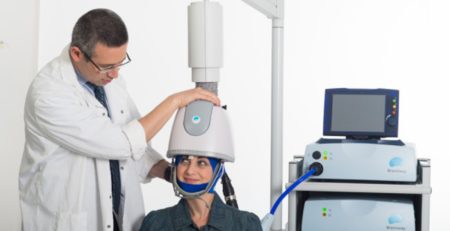
Deep TMS
Transcranial magnetic stimulation uses magnetic stimulation to affect brain circuits involved in mental health conditions. NIMH describes repetitive TMS as a noninvasive brain-stimulation therapy and notes its FDA-cleared uses in treatment-resistant depression.
Interpersonal Psychiatry offers Deep TMS therapy at its Kansas clinics for appropriately selected patients. The practice describes it as a noninvasive option that may be considered when depression has not adequately improved with traditional treatment.
Deep TMS is not automatically the next treatment for everyone whose antidepressant has not worked. A clinical evaluation is necessary to determine whether TMS is appropriate for an individual's diagnosis, treatment history, and health circumstances.
Spravato (esketamine)
Spravato treatment is another option that may be considered for certain adults with treatment-resistant depression.
Spravato contains esketamine and is administered as a nasal spray under healthcare supervision. According to the FDA's January 2025 prescribing information, Spravato is indicated for treatment-resistant depression in adults either as monotherapy or in conjunction with an oral antidepressant.
The FDA also requires monitoring for at least two hours following administration because of risks including sedation, dissociation, and respiratory depression. Spravato is available only through a restricted Risk Evaluation and Mitigation Strategy program.
Patients considering this treatment should review candidacy, risks, potential benefits, medication history, medical conditions, and practical treatment requirements with a qualified provider. The current FDA prescribing information for Spravato provides detailed safety and indication information.
Ketamine therapy
Ketamine and esketamine are related, but they should not be treated as interchangeable terms.
Spravato is an FDA-approved esketamine nasal spray with specific labeled psychiatric indications. IV ketamine is an FDA-approved anesthetic, but its use for depression is an off-label application. Off-label prescribing is different from FDA approval for a particular condition and should be described clearly when discussing psychiatric ketamine treatment.
Interpersonal Psychiatry also offers ketamine therapy in Kansas for patients evaluated as appropriate candidates. The practice has previously published an overview of ketamine infusion therapy for depression for patients who want to understand that treatment in more detail.
How Are Deep TMS, Spravato and Ketamine Different?
These treatments are sometimes grouped together as “advanced depression treatments,” but they are not versions of the same therapy.
Deep TMS is a noninvasive brain-stimulation treatment. It does not involve taking an antidepressant medication during the treatment session itself.
Spravato is the brand name for esketamine nasal spray. It has FDA-approved psychiatric indications, must be administered under healthcare supervision, and is subject to specific monitoring and REMS requirements.
IV ketamine involves administering ketamine intravenously. Although ketamine is an FDA-approved medication for anesthesia, its psychiatric use for depression is off-label.
Which approach, if any, is appropriate depends on far more than which treatment sounds most appealing. Diagnosis, previous treatment response, current medications, physical health, psychiatric history, side-effect considerations, accessibility, and patient preference can all influence treatment planning.
When Is It Time to Request a Psychiatric Re-Evaluation?
You do not have to wait until every possible antidepressant has been tried before asking whether the treatment plan deserves another look.
A psychiatric re-evaluation may be useful when depressive symptoms remain significantly disruptive despite treatment, when improvement has stalled, when side effects are difficult to manage, when symptoms have changed, or when there is uncertainty about the diagnosis.
It may also be appropriate when someone has gone through multiple treatment attempts without understanding why each was selected or what alternatives are available.
The goal of an evaluation is not to steer every patient toward an advanced treatment. Sometimes reassessment confirms that the current approach is reasonable. Sometimes it identifies a medication or therapy change. And sometimes it opens a conversation about options such as Deep TMS, Spravato, or ketamine.
Depression Treatment Should Be Personalized
Persistent depression can make each unsuccessful treatment feel like another reason to lose hope. Clinically, however, an inadequate response provides information. It tells the treatment team that the current strategy has not yet produced the desired outcome and that the plan may need to evolve.
That is why whole-person psychiatric care matters.
Interpersonal Psychiatry provides psychiatric evaluation, medication management, therapy, Deep TMS, Spravato and ketamine treatment through its mental health treatment services. In-person care is available in Lawrence, Topeka and Overland Park, Kansas, and the practice states that telehealth is available across Kansas and Missouri when appropriate.
Patients near Johnson County who are considering in-person psychiatric care can also learn more about the Overland Park psychiatry location and services.
Questions to Ask When Depression Treatment Isn't Working
Preparing a few questions before an appointment can make it easier to have a productive conversation with a provider. You might ask:
- How are we measuring whether my current treatment is working?
- Have I had an adequate trial of my current medication?
- Could another condition be contributing to my symptoms?
- Would psychotherapy or a different form of therapy add something to my treatment plan?
- At what point would you consider my depression treatment resistant?
- Are there other medication strategies that may be appropriate?
- Should we discuss treatments such as TMS, Spravato, or ketamine?
- What are the benefits, risks, time commitments, and monitoring requirements of those options?
You do not need to arrive knowing which treatment you want. A good evaluation is an opportunity to understand the choices and make decisions collaboratively.
Frequently Asked Questions About Antidepressants and Treatment-Resistant Depression
How many antidepressants have to fail before depression is considered treatment resistant?
Treatment-resistant depression is commonly associated with inadequate improvement after multiple appropriate antidepressant treatment attempts, but definitions and clinical circumstances vary. A psychiatric provider should review the medications, doses, treatment durations, adherence, diagnoses, and other factors before determining whether the term applies to a particular patient.
Does treatment-resistant depression mean antidepressants will never work?
No. The term describes an inadequate response to treatment attempts so far; it does not establish that future medication or other treatments cannot help. A reassessment can help determine whether medication changes, psychotherapy, brain stimulation, or another approach deserves consideration.
Is TMS only for people who cannot take antidepressants?
No. TMS may be considered for people whose depression has not adequately responded to other treatment, including medication. Eligibility depends on the specific treatment protocol, diagnosis, treatment history, medical considerations, and clinical evaluation.
Is Spravato the same thing as ketamine?
No. Spravato contains esketamine, which is related to ketamine but is a distinct prescription product. Spravato has FDA-approved psychiatric indications and specific administration and monitoring requirements. IV ketamine's use for depression is off-label.
Should I stop taking an antidepressant if it isn't helping?
Do not stop or change a prescribed antidepressant on your own. Abrupt medication changes can cause problems and may worsen symptoms. Discuss lack of improvement, side effects, or other concerns with the prescribing provider so that changes can be planned safely.
Where can I discuss treatment-resistant depression in Kansas?
Interpersonal Psychiatry provides psychiatric care and advanced treatment options through offices in Lawrence, Topeka, and Overland Park. Telehealth is also available across Kansas and Missouri when appropriate. To ask about an evaluation or treatment options, contact Interpersonal Psychiatry.
There Can Be a Next Step
When depression treatment has not provided enough relief, the answer is not necessarily to keep repeating the same approach. It is to understand what has been tried, what has changed, what may be contributing to persistent symptoms, and which evidence-based options deserve consideration next.
For some people, that may mean refining medication management or adding psychotherapy. For others, a provider may recommend evaluating options such as Deep TMS, Spravato, or ketamine therapy.
If you have been through multiple depression treatments and still feel stuck, you can contact the Interpersonal Psychiatry team to ask about an evaluation and available treatment options in Lawrence, Topeka, Overland Park, or through telehealth when appropriate.
This article is for educational purposes and is not a substitute for individualized medical advice, diagnosis, or treatment. Do not start, stop, or change medication without guidance from a qualified healthcare professional.