Finding Your Way Back: Compassionate, Effective Addiction Treatment with Interpersonal Psychiatry
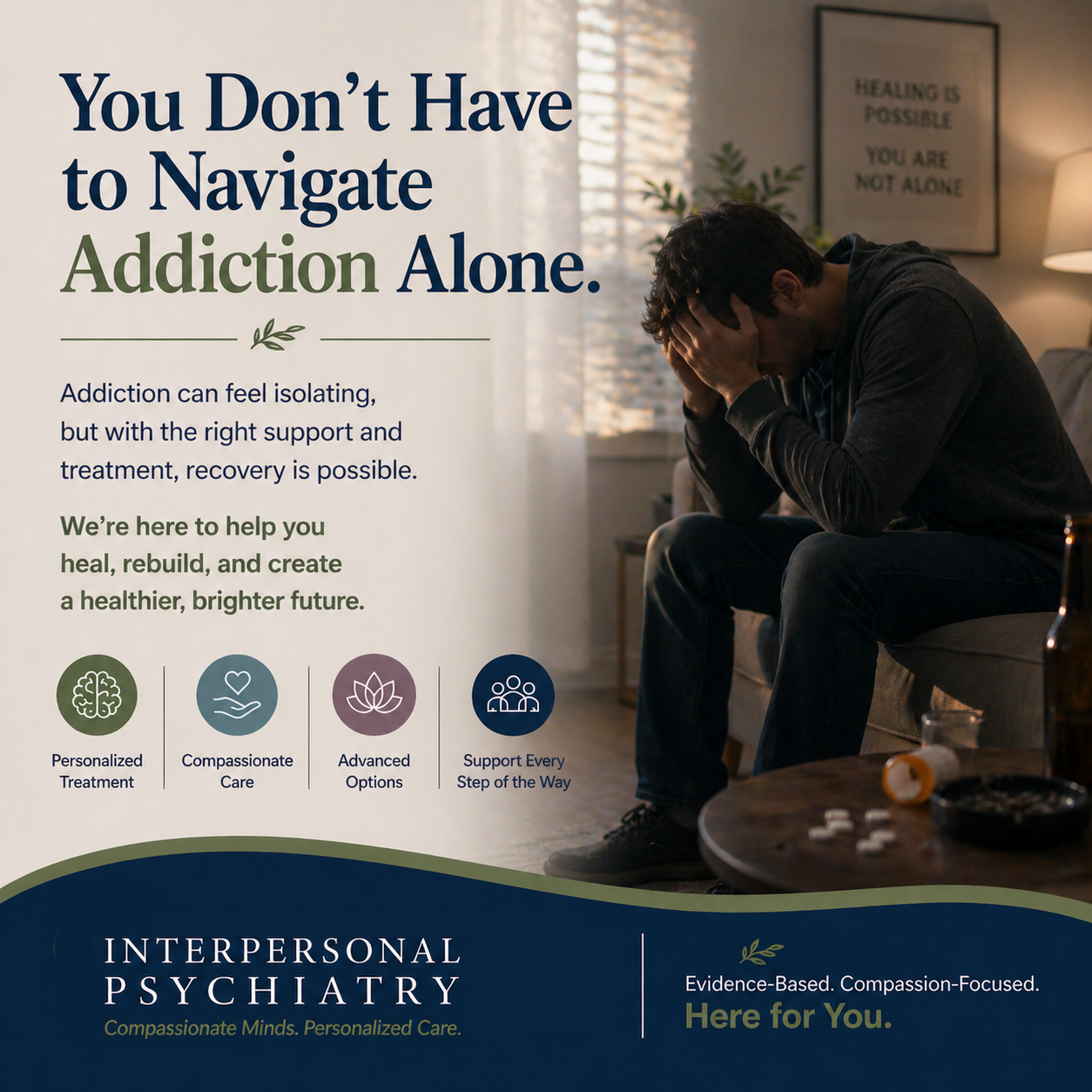
Addiction can feel overwhelming, isolating, and deeply personal.
For many individuals, it’s not just about substances—it’s about pain, stress, trauma, or life circumstances that slowly became too much to carry alone. If you’re here reading this, there’s a good chance you—or someone you care about—is searching for answers, support, and a way forward.
The most important thing to understand is this:
You are not broken. And you are not beyond help.
At Interpersonal Psychiatry, addiction is treated with compassion, respect, and evidence-based care designed around the individual—not a one-size-fits-all approach.
This guide will walk you through:
- What addiction really is
- Why professional psychiatric care matters
- What treatment looks like
- And why Interpersonal Psychiatry stands out as a trusted provider
Understanding Addiction: More Than Just a Habit
Addiction, clinically known as substance use disorder, is not a lack of willpower. It is a complex medical and psychological condition that affects brain chemistry, behavior, and emotional regulation.
According to organizations like the Substance Abuse and Mental Health Services Administration, millions of Americans struggle with substance use and mental health disorders each year, often at the same time.
This overlap—called co-occurring disorders—is one of the key reasons addiction is so difficult to overcome without proper support.
Addiction often involves:
- Changes in brain reward systems
- Increased tolerance and dependence
- Emotional distress or trauma
- Difficulty controlling use despite consequences
It’s not simply about “stopping.” It’s about healing the underlying causes.
Why Psychiatry Matters in Addiction Treatment
Many people attempt to quit on their own—and while that effort is incredibly brave, it’s often not enough.
Addiction is both a mental health condition and a medical condition, which is why psychiatric care plays a critical role in recovery.
At its core, addiction treatment should address:
- Brain chemistry
- Emotional triggers
- Behavioral patterns
- Underlying mental health conditions
That’s exactly what Interpersonal Psychiatry provides.
Their approach integrates:
- Psychiatric evaluation
- Medication management
- Therapy and counseling
- Long-term recovery support
This kind of comprehensive care is essential because addiction rarely exists in isolation. It is often connected to conditions like anxiety, depression, trauma, or ADHD—all of which require proper diagnosis and treatment.
Explore full services here: Treatment Services
A Personalized Approach to Addiction Recovery
One of the biggest mistakes in addiction care is assuming every patient needs the same treatment.
They don’t.
At Interpersonal Psychiatry, treatment is built around you—your history, your goals, and your challenges.
What Personalized Care Looks Like
1. Comprehensive Psychiatric Assessment
Your journey begins with understanding—not assumptions. Providers take the time to evaluate:
- Substance use patterns
- Mental health history
- Life stressors and trauma
- Physical health factors
2. Medication-Assisted Treatment (MAT)
For many individuals, medication can be life-changing. MAT may include options like Suboxone and other clinically appropriate treatments to:
- Reduce cravings
- Prevent withdrawal symptoms
- Stabilize recovery
3. Therapy and Counseling
Recovery isn’t just physical—it’s emotional.
Therapy helps patients:
- Understand triggers
- Develop coping strategies
- Rebuild relationships
- Process trauma
4. Ongoing Support and Monitoring
Recovery is a journey, not a one-time fix. Continued care ensures:
- Adjustments to treatment plans
- Long-term success
- Relapse prevention
The Role of Interpersonal Therapy in Addiction Recovery
One of the unique strengths of Interpersonal Psychiatry is its emphasis on interpersonal care—treating not just symptoms, but relationships and life context.
Interpersonal therapy focuses on improving how individuals interact with others and navigate life challenges. It addresses areas like:
- Relationship conflict
- Major life transitions
- Grief and loss
- Social isolation
Why does this matter for addiction?
Because addiction is often tied to:
- Relationship stress
- Loneliness
- Emotional disconnection
When those areas improve, recovery becomes more sustainable.
Treating the Whole Person, Not Just the Addiction
Addiction rarely shows up alone.
Many patients also struggle with:
At Interpersonal Psychiatry, treatment plans are designed to address all of these factors together, not separately.
This integrated approach leads to:
- Better outcomes
- Lower relapse rates
- Improved quality of life
Advanced Treatment Options That Set Interpersonal Psychiatry Apart
What truly separates Interpersonal Psychiatry from many providers is its access to advanced, evidence-based treatments.
These include:
Ketamine Therapy
Used for treatment-resistant depression and certain co-occurring conditions, ketamine therapy can provide rapid symptom relief for some patients.
Spravato (Esketamine)
An FDA-approved nasal spray for depression that hasn’t responded to traditional treatments.
Deep TMS (Transcranial Magnetic Stimulation)
A non-invasive treatment that stimulates targeted areas of the brain.
These advanced options are especially important for individuals whose addiction is connected to deeper mental health challenges.
A Judgment-Free Environment Where Healing Begins
One of the biggest barriers to seeking help is fear:
- Fear of being judged
- Fear of failure
- Fear of being misunderstood
At Interpersonal Psychiatry, care is built on a simple but powerful principle:
You deserve respect, no matter where you are in your journey.
Their team provides:
- Compassionate, non-judgmental support
- A safe space to speak openly
- Encouragement without pressure
This environment makes it easier to take that first step—and keep going.
Convenient, Accessible Care Across Kansas & Missouri
Accessibility matters—especially when you’re dealing with addiction.
Interpersonal Psychiatry offers care in:
They also provide telehealth services, allowing patients to receive care from the comfort and privacy of home.
This flexibility removes a major barrier to treatment and helps patients stay consistent.
Why Interpersonal Psychiatry Is the Right Choice for Addiction Treatment
Choosing a provider is one of the most important decisions in your recovery journey.
Here’s why so many individuals trust Interpersonal Psychiatry:
1. Experienced, Board-Certified Providers
A multidisciplinary team of psychiatrists and nurse practitioners ensures high-quality care.
2. Evidence-Based Treatment
All care is grounded in proven clinical approaches—not guesswork.
3. Personalized Treatment Plans
No two patients are treated the same.
4. Advanced Therapies Available
Access to cutting-edge options like ketamine, Spravato, and Deep TMS.
5. Whole-Person Care
Mental health, physical health, and emotional well-being are all addressed.
6. Telehealth Convenience
Care that fits your life—not the other way around.
7. Compassionate, Human Approach
You’re treated like a person, not a diagnosis.
Taking the First Step Toward Recovery
Starting addiction treatment can feel like the hardest step—but it’s also the most important.
You don’t need to have everything figured out.
You don’t need to be “ready” in a perfect sense.
You just need to be willing to take one step forward.
At Interpersonal Psychiatry, that step is met with:
- Understanding
- Professional guidance
- A clear path forward
You’re Not Alone—And You Don’t Have to Stay Stuck
Addiction can make you feel isolated—but recovery is built on connection, support, and care.
With the right team, the right treatment, and the right environment, healing is absolutely possible.
If you’re ready to explore your options, ask questions, or begin your journey:
👉 Visit: https://ip-psych.com/addiction/
👉 Or explore all services: https://ip-psych.com/treatment-services/
Final Thoughts
Addiction is not the end of your story.
It’s a chapter—and one that can be rewritten with the right support.
At Interpersonal Psychiatry, patients aren’t just treated—they’re understood, supported, and guided toward lasting recovery.
And that can make all the difference.