Mental Health Care Is Becoming Part of Everyday Wellness
For many people in Overland Park, mental health care is no longer viewed as something reserved only for moments of crisis. More individuals, couples, parents, professionals, and families are recognizing that emotional wellness deserves the same attention as physical health. Anxiety, depression, attention difficulties, trauma, mood changes, and chronic stress can affect nearly every part of life, from sleep and relationships to work performance and physical well-being.
Even so, deciding to contact a psychiatrist can feel like a significant step. Some people worry that their symptoms are not serious enough. Others have tried to manage everything on their own for months or years. Many have already spoken with a primary care provider or therapist, but still feel that something is missing from their treatment plan. The truth is that you do not have to wait until your life feels unmanageable before seeking psychiatric support.
A qualified psychiatrist can help you understand what you are experiencing, identify possible causes, and explore treatment options that fit your needs. For people searching for an Overland Park psychiatrist, the goal is not simply to receive a diagnosis or prescription. It is to find compassionate, evidence-based care that considers the whole person and creates a realistic path toward feeling better.
Why People Seek a Psychiatrist in Overland Park
Overland Park is a thriving community filled with busy professionals, growing families, students, caregivers, and retirees. While the city offers many opportunities, a full life can also carry considerable pressure. Demanding schedules, long commutes, parenting responsibilities, financial concerns, relationship stress, health challenges, and major life transitions can gradually take a toll on mental health.
Some people seek psychiatric care because they are experiencing a clear and persistent problem, such as depression, panic attacks, intrusive thoughts, severe mood swings, or difficulty concentrating. Others simply know that they do not feel like themselves anymore. They may be more irritable, less motivated, emotionally exhausted, or increasingly disconnected from the people and activities they once enjoyed.
Psychiatric care can also be helpful when previous treatment has not provided enough relief. A person may have tried several medications without finding the right fit. Another may be attending therapy but still experiencing symptoms that interfere with daily life. Someone else may have been given a diagnosis years ago and now wonders whether it still accurately reflects what they are experiencing. A comprehensive psychiatric evaluation can bring greater clarity to these situations and help determine the next appropriate step.
Understanding What a Psychiatrist Does
A psychiatrist is a medical doctor who specializes in diagnosing and treating mental health conditions. Because psychiatrists have medical training, they can evaluate emotional symptoms alongside physical health, medication history, sleep patterns, substance use, family history, and other factors that may influence how a person feels.
This broader perspective is especially valuable because mental health symptoms often overlap. Anxiety can make concentration difficult. Depression can disrupt sleep and create physical fatigue. Trauma may appear as irritability, emotional numbness, or constant alertness. ADHD can contribute to low self-esteem, relationship conflict, and chronic overwhelm. A careful evaluation looks beyond a single symptom and considers how different pieces may connect.
Psychiatric treatment may include medication management, psychotherapy recommendations, coordination with other providers, lifestyle support, or advanced treatment options. The right plan depends on the individual. Some people benefit from medication, while others may need adjustments to an existing prescription. Some may be best supported through therapy, testing, or a combination of approaches. Good psychiatric care should be collaborative, transparent, and tailored rather than rushed or generic.
Signs It May Be Time to Seek Professional Support
People often wonder how to know when everyday stress has become something that deserves professional attention. There is no single rule, but persistent changes in mood, behavior, sleep, energy, concentration, or relationships are worth noticing. If symptoms have lasted for weeks, keep returning, or are interfering with work, school, parenting, or daily responsibilities, a psychiatric evaluation may be helpful.
You may also benefit from speaking with a provider if you are withdrawing from others, relying on alcohol or substances to cope, experiencing frequent panic, struggling with intense emotional reactions, or feeling unable to enjoy life. Sometimes the most important sign is simply the sense that your usual coping strategies are no longer working.
Seeking help early can prevent symptoms from becoming more disruptive. It can also offer reassurance. Even when a person does not meet the criteria for a specific diagnosis, a psychiatric consultation can provide insight, practical recommendations, and a clearer understanding of what support may be useful.
Mental Health Conditions Can Look Different for Everyone
Two people can have the same diagnosis and experience it in completely different ways. One person with anxiety may have frequent panic attacks, while another lives with constant worry, muscle tension, and difficulty sleeping. Depression may appear as sadness for one individual and emotional numbness, irritability, or exhaustion for another. This is why personalized evaluation matters.
Interpersonal Psychiatry works with individuals experiencing a wide range of mental health concerns, including anxiety disorders, depression, ADHD, bipolar disorder, obsessive-compulsive disorder, trauma-related symptoms, grief, addiction, relationship difficulties, and personality-related concerns. Treatment begins by understanding how symptoms affect the person’s actual life rather than assuming every patient needs the same approach.
A thoughtful diagnosis can be validating, but it is not the final goal. The purpose is to create a treatment plan that reduces distress, improves functioning, and supports long-term emotional wellness. That may involve addressing a single primary condition or several overlapping concerns simultaneously.
Anxiety and Depression Treatment
Anxiety and depression are among the most common reasons people search for psychiatric care in Overland Park. Both conditions are highly treatable, but they can become deeply disruptive when left unaddressed. Anxiety may create racing thoughts, restlessness, physical tension, avoidance, panic, or a constant sense that something bad is about to happen. Depression may lead to hopelessness, low motivation, sleep changes, loss of interest, difficulty concentrating, and isolation.
Treatment may include medication, therapy, changes to daily routines, or a combination of approaches. A psychiatrist can help determine whether symptoms are connected to an anxiety disorder, major depressive disorder, trauma, bipolar disorder, a medical condition, medication side effects, or another underlying factor.
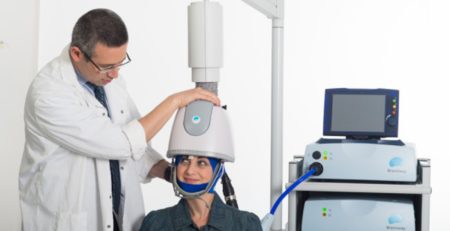
For individuals who have already tried standard treatments without enough improvement, advanced options may also be considered. Interpersonal Psychiatry offers access to Deep TMS, Spravato, and ketamine therapy for appropriately selected patients. These options can be especially meaningful for people living with treatment-resistant depression who feel they have exhausted traditional approaches.
ADHD, Focus, and Chronic Overwhelm
Adults with ADHD are often misunderstood. Many were never evaluated in childhood and have spent years believing they are simply disorganized, unmotivated, forgetful, or poor at time management. In reality, ADHD can affect attention, impulse control, emotional regulation, planning, working memory, and the ability to complete tasks consistently.
The effects may become more noticeable when adult responsibilities increase. Managing work deadlines, household tasks, appointments, finances, parenting, and relationships can expose difficulties that were easier to compensate for earlier in life. A comprehensive ADHD evaluation looks at current symptoms, childhood patterns, functioning across settings, and other conditions that may mimic attention problems.
Interpersonal Psychiatry also offers Conners computerized testing as one tool that may support ADHD assessment and treatment planning. Testing is not used in isolation, but it can provide additional information when combined with a clinical evaluation. Treatment may include medication, behavioral strategies, therapy, organizational support, or a combination of these approaches.
Medication Management Should Feel Collaborative
Medication can be an important part of psychiatric treatment, but it should never feel like a rushed or one-sided decision. Effective medication management involves discussing benefits, possible side effects, expectations, concerns, and alternatives. It also requires follow-up, because the first medication or dosage is not always the final answer.
A provider may review previous medication trials, current prescriptions, medical history, sleep, substance use, and other factors that influence treatment. Genetic testing or pharmacogenomic information may sometimes be used to support medication decisions, although it is only one part of the overall clinical picture.
Ongoing appointments allow the treatment plan to evolve. Symptoms may change, side effects may appear, or life circumstances may create new needs. Collaborative medication management helps patients remain informed and involved rather than feeling that decisions are being made for them.
The Role of Therapy and Whole-Person Care
Medication may reduce symptom intensity, but therapy can help people understand patterns, build coping skills, improve relationships, and create lasting behavioral change. Depending on the person’s needs, treatment may include individual therapy, couples counseling, family therapy, trauma-informed care, EMDR, mindfulness-based strategies, or acceptance and commitment therapy.
Whole-person care also considers sleep, stress, daily structure, relationships, physical health, and the environment in which symptoms occur. Mental health does not exist separately from the rest of life. A plan that ignores those factors may provide temporary relief but fail to support long-term stability.
The strongest treatment relationships are built on trust. Patients should feel safe asking questions, describing setbacks, and expressing uncertainty. Compassionate psychiatric care is not about telling people what they should feel. It is about helping them understand their options and make informed decisions about their own well-being.
What to Expect During Your First Appointment
The first psychiatric appointment is often easier than people expect. You do not need to arrive with a perfect explanation of your symptoms, nor do you need to know which diagnosis or treatment you need. The appointment is an opportunity to describe what has been happening and how it has affected your life.
A provider may ask about mood, anxiety, sleep, attention, energy, relationships, work or school, physical health, family history, medications, substance use, and previous treatment. These questions are not meant to judge you. They help create a complete picture and identify patterns that may be difficult to recognize when you are living through them.
After the evaluation, the provider can discuss impressions, answer questions, and explain possible treatment options. In some situations, more information or testing may be needed before reaching a firm diagnosis. A responsible clinician should be willing to say when something requires further evaluation rather than forcing an immediate label.
Choosing a Provider Who Listens
Credentials and experience matter, but the relationship between a patient and provider matters too. Psychiatric care often involves personal subjects, difficult memories, and honest conversations about symptoms that may be embarrassing or painful. You should feel that your provider listens carefully, explains recommendations clearly, and respects your concerns.
Many patients seek a new psychiatrist after feeling rushed, dismissed, or overmedicated elsewhere. Others are looking for a provider who offers more treatment options or is willing to reconsider a diagnosis that no longer seems accurate. It is reasonable to want care that feels both clinically strong and genuinely human.
At Interpersonal Psychiatry, treatment is designed around the individual rather than a template. The practice provides psychiatric evaluations, medication management, psychotherapy and counseling, addiction treatment, ADHD assessment, telehealth, and advanced therapies. This range of services makes it easier to build a coordinated plan when a patient needs more than one form of support.
Convenient Mental Health Care in Overland Park
Access matters. When care is too far away, difficult to schedule, or disconnected from daily life, it becomes harder to remain consistent. Interpersonal Psychiatry’s Overland Park office is located at 7011 W. 121st Street, Suite 105, Overland Park, Kansas 66209. The location serves residents throughout Overland Park, Johnson County, and nearby communities.
Telehealth is also available across Kansas and Missouri when appropriate. This option can be especially helpful for busy professionals, parents, people with transportation challenges, or patients who prefer to attend appointments from home. Telehealth does not eliminate the need for in-person care in every situation, but it can make ongoing psychiatric treatment more accessible and sustainable.
Interpersonal Psychiatry also has offices in Lawrence and Topeka. These locations allow the practice to serve a wider range of patients while maintaining consistent access to psychiatric care, therapy, and advanced treatment options. Internal links between the Overland Park, Lawrence, and Topeka pages can also help visitors quickly find the location that best fits their needs.
Why Early Support Matters
People often postpone psychiatric care because they believe they should be able to handle things on their own. They wait for work to slow down, for a stressful season to pass, or for symptoms to become more obvious. Unfortunately, mental health concerns do not always resolve simply because time passes.
Early support can reduce the risk that symptoms will affect more areas of life. Addressing anxiety before avoidance becomes severe, treating depression before isolation deepens, or evaluating ADHD before years of frustration accumulate can make recovery feel more manageable. Seeking help does not mean you are weak or incapable. It means you are paying attention to your health.
You also do not need to be in crisis to benefit from psychiatric care. Many people schedule an appointment because they want greater clarity, better coping skills, improved focus, healthier relationships, or a more effective treatment plan. Preventive and early mental health care can be just as valuable as treatment during an emergency.
Take the Next Step Toward Feeling Better
Finding the right psychiatrist in Overland Park can be the beginning of meaningful change. Whether you are experiencing anxiety, depression, ADHD, trauma, mood instability, addiction, grief, relationship stress, or symptoms you cannot fully explain, you deserve care that takes your experience seriously.
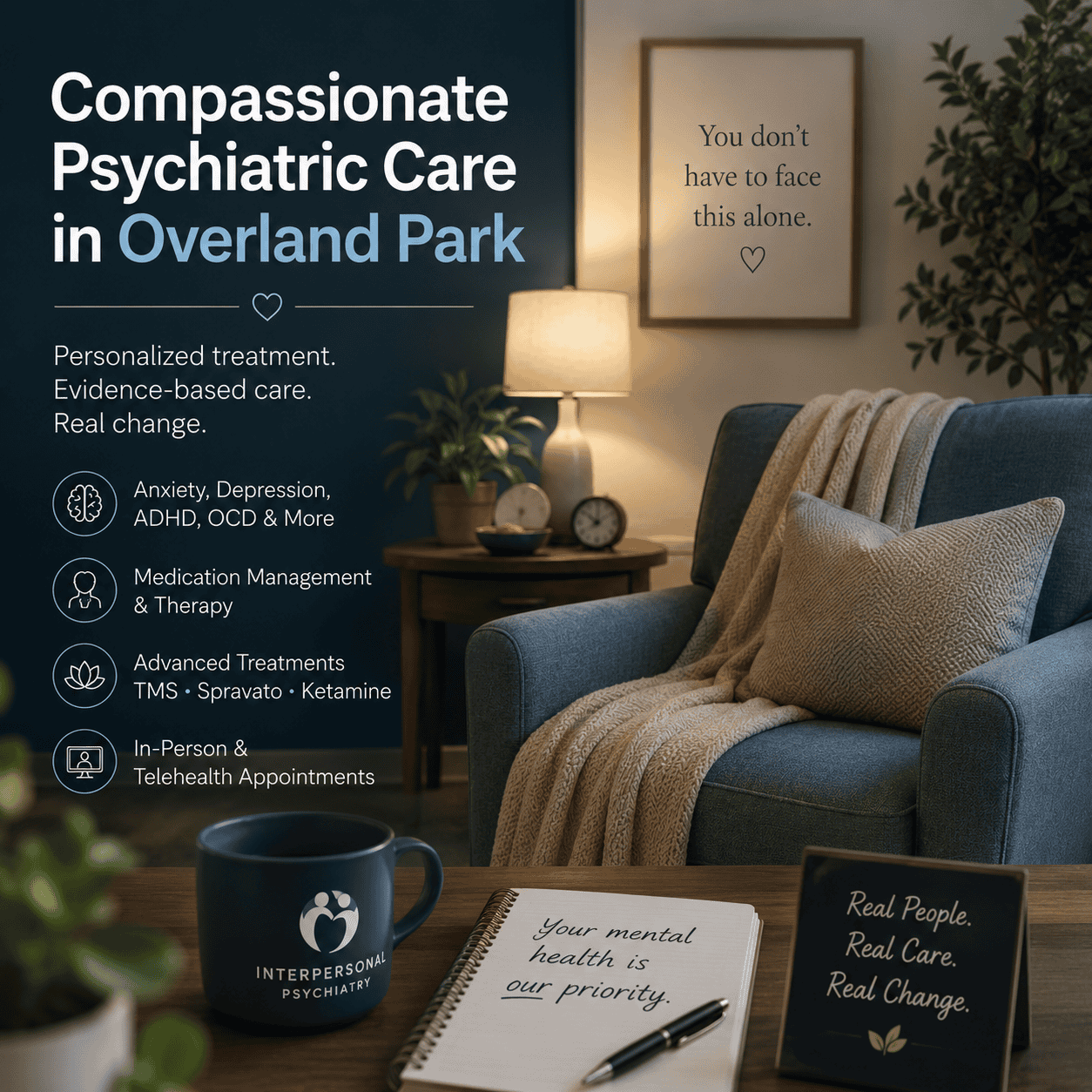
Interpersonal Psychiatry provides compassionate, evidence-based mental health services, with treatment plans tailored to each patient’s needs. Care may include psychiatric evaluation, medication management, therapy, testing, telehealth, or advanced treatment options such as Deep TMS, Spravato, and ketamine therapy when clinically appropriate.
The first step does not require having every answer. It only requires recognizing that you do not have to continue carrying everything alone. To learn more, visit the Overland Park psychiatrist location page, explore the full range of treatment services, or schedule an appointment with the Interpersonal Psychiatry team.
For life-threatening emergencies or immediate danger, call 911 or go to the nearest emergency department.